Reflections on a Flight to the Moon
The Artemis II crewed mission to the moon wrapped up this week and I wanted to get some thoughts about it written down to record the cultural and personal impacts I saw and felt.
The Cultural Zeitgeist
Times are dark in America. Just a month ago, a new war in the middle east was begun without the least bit of explanation or consultation with the American people. Our national leadership is increasingly malevolent and incompetent. Our traditional allies, shunned and mistreated, are recoiling from us. Citizens are murdered at the hands of immigration agents and face no consequences. Any effort to embrace or celebrate workforce diversity in federally funded programs is squelched by presidential directive. There’s a continuing cultural war that only seems to deepen and intensify as time goes on. We fear that our democracy is fragile and near the breaking point, a feeling that is alien to most people under 60. As a nation, we haven’t had much to cheer about.
Along comes NASA’s Artemis II mission, something that most in this country were completely ignorant of until a week or so before it happened; the lowest-key mission to the moon ever. Things changed a day or two before launch as attention suddenly became intense. It’s hard not to be excited about a giant moon rocket, the likes of which have not been seen since the early 1970s. Even the most jaded will tune in for that.
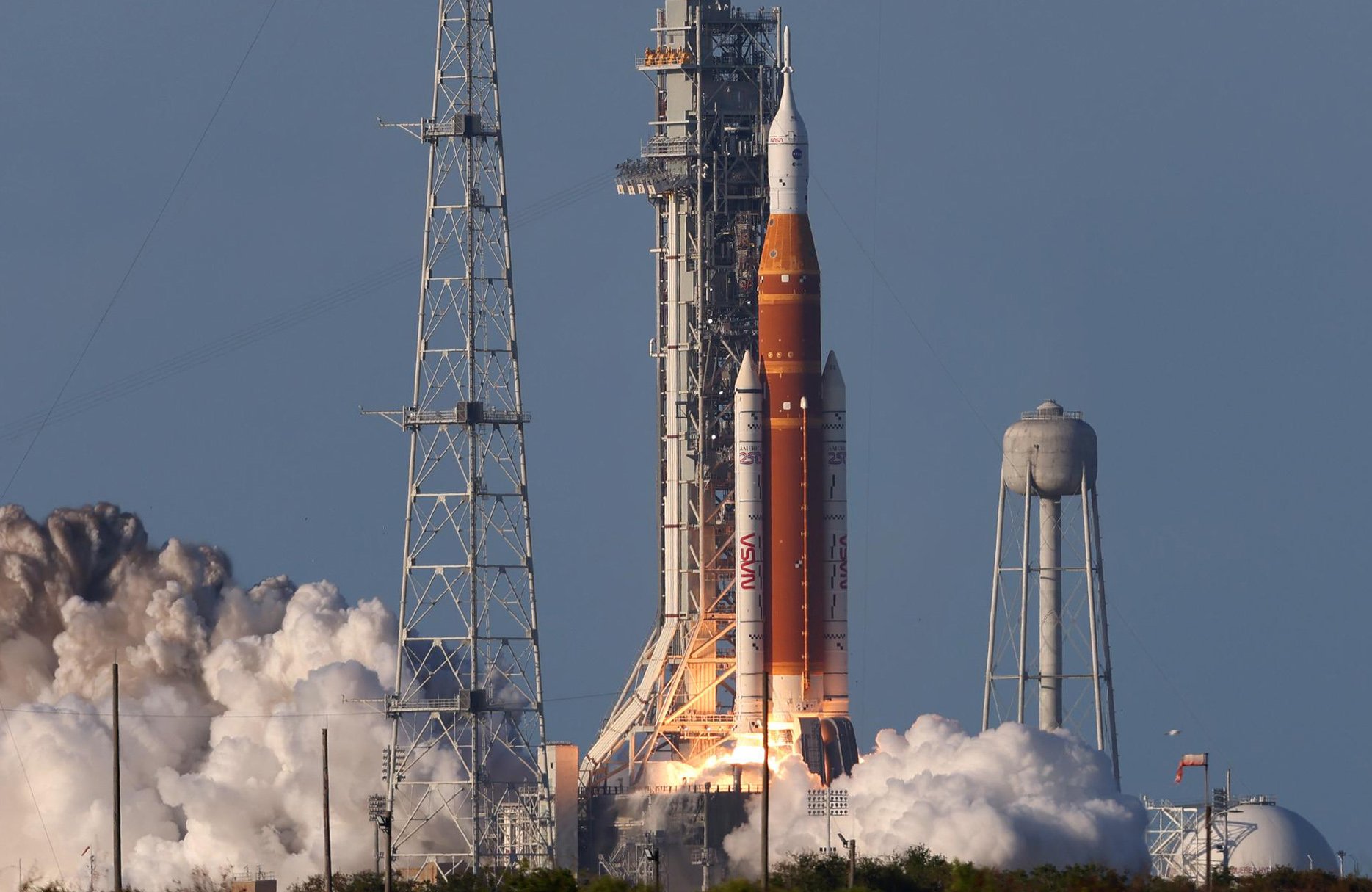
SLS carries the Orion spacecraft aloft during a perfect launch.
The launch came off without a hitch; no unexpected holds, no concerning equipment glitches, no sketchy weather. Practically unheard of for a launch of this complexity with a vehicle that had only flown once before...and nearly a full four years ago at that. That’s a long time to get rusty between launches. But the liftoff was thrilling and the ascent riveting, as the vehicle pierced an azure, cloudless sky, safely delivering the four-astronaut crew into a perfect orbit.
Social Media in the Second Space Age
The way we collectively experience high-profile events now is through social media...and boy, was this ever an event made for social media, deftly orchestrated by a modern NASA that knows how to manage public communication. Unlike the Apollo missions where there was little live television from the spacecraft, stingy evening news coverage, no photos until film was returned to earth, and no view into what was happening moment-to-moment, the modern Artemis mission involved the earth-bound to any extent they might wish: track the spacecraft at all times, see the crew going about its business, listen to discussions with mission controllers, see the live view outside the spacecraft, and more. One could feel as if they were riding along on the mission as an observer (or participant) in a way never before possible. And we could share our enthusiasm with each other online. And from the online reaction, it was clear that we were thrilled to have something to cheer for.
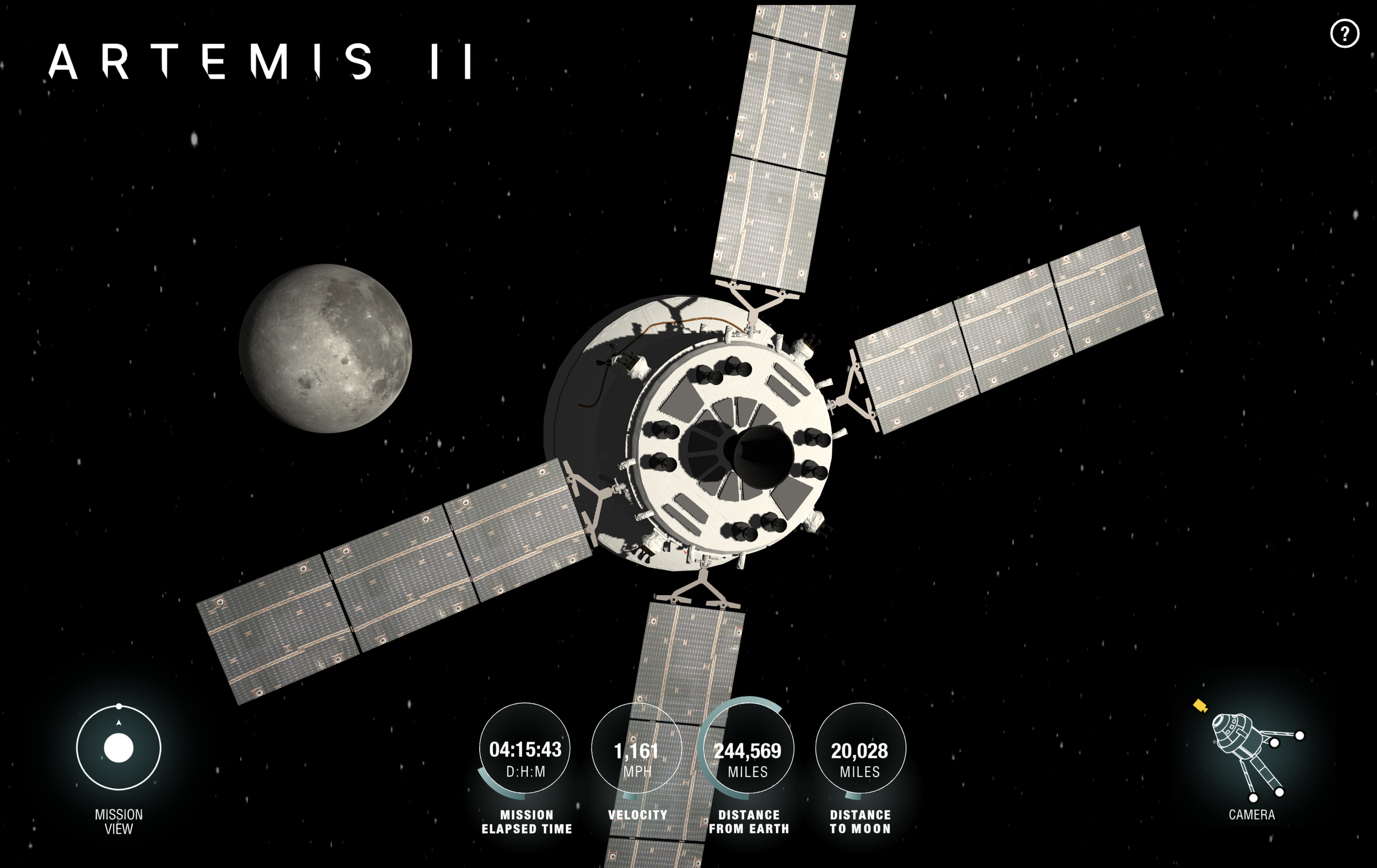
NASA’s super cool online visualizer tool that allowed anyone with a computer to see where the spacecraft was in space and how it was oriented to the moon and the earth.
‘Competence Porn’ and Moon Joy
Two phrases were seen frequently during the mission that came to embody the feelings surrounding it: “competence porn” and “moon joy.”
Competence porn showcases highly skilled people performing their work with exceptional precision and expertise. The appeal comes from watching people who are the best at what they do and doing it as a team to achieve an important common goal. There’s something really satisfying seeing it in action...and it scratched an itch created by the incompetence exhibited by public figures lately—anti-science and otherwise.
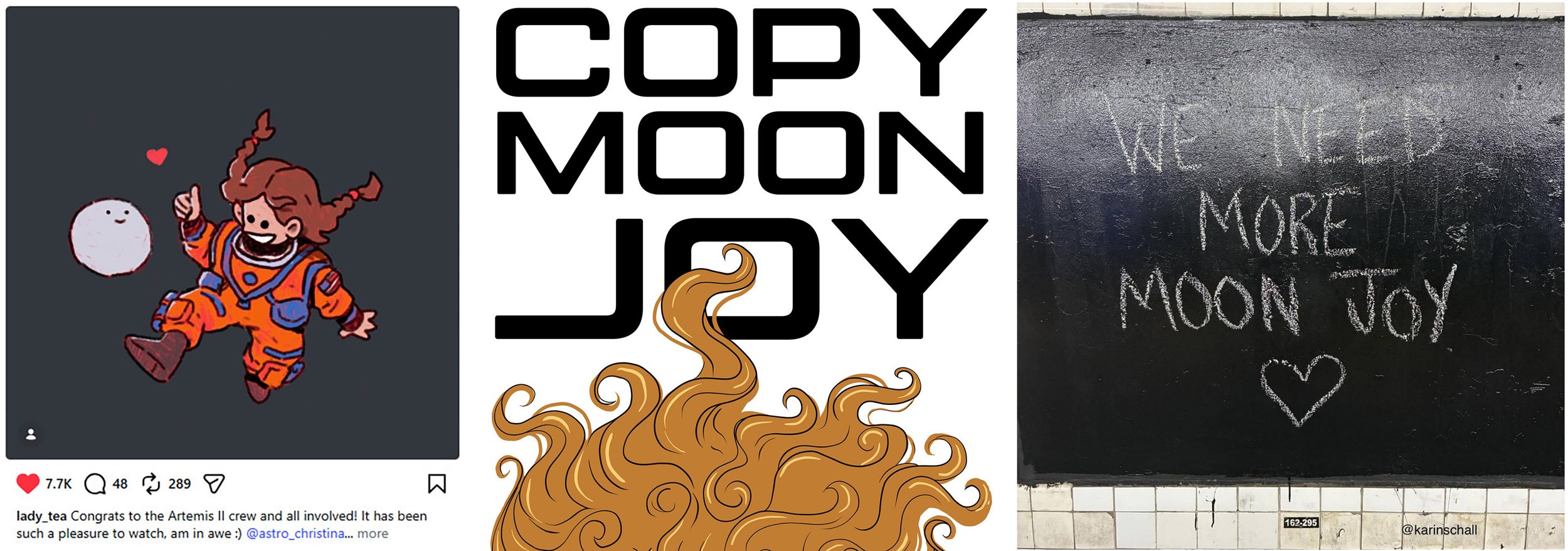
During an exchange with the crew, a ground controller said “...copy, moon joy” and the phrase immediately stuck. It seemed to capture the feeling we were all sharing: joy over sharing the experience of flying to the moon with a crew that was unapologetically enthusiastic about what they were doing, gazing out the window of their craft in wonder.
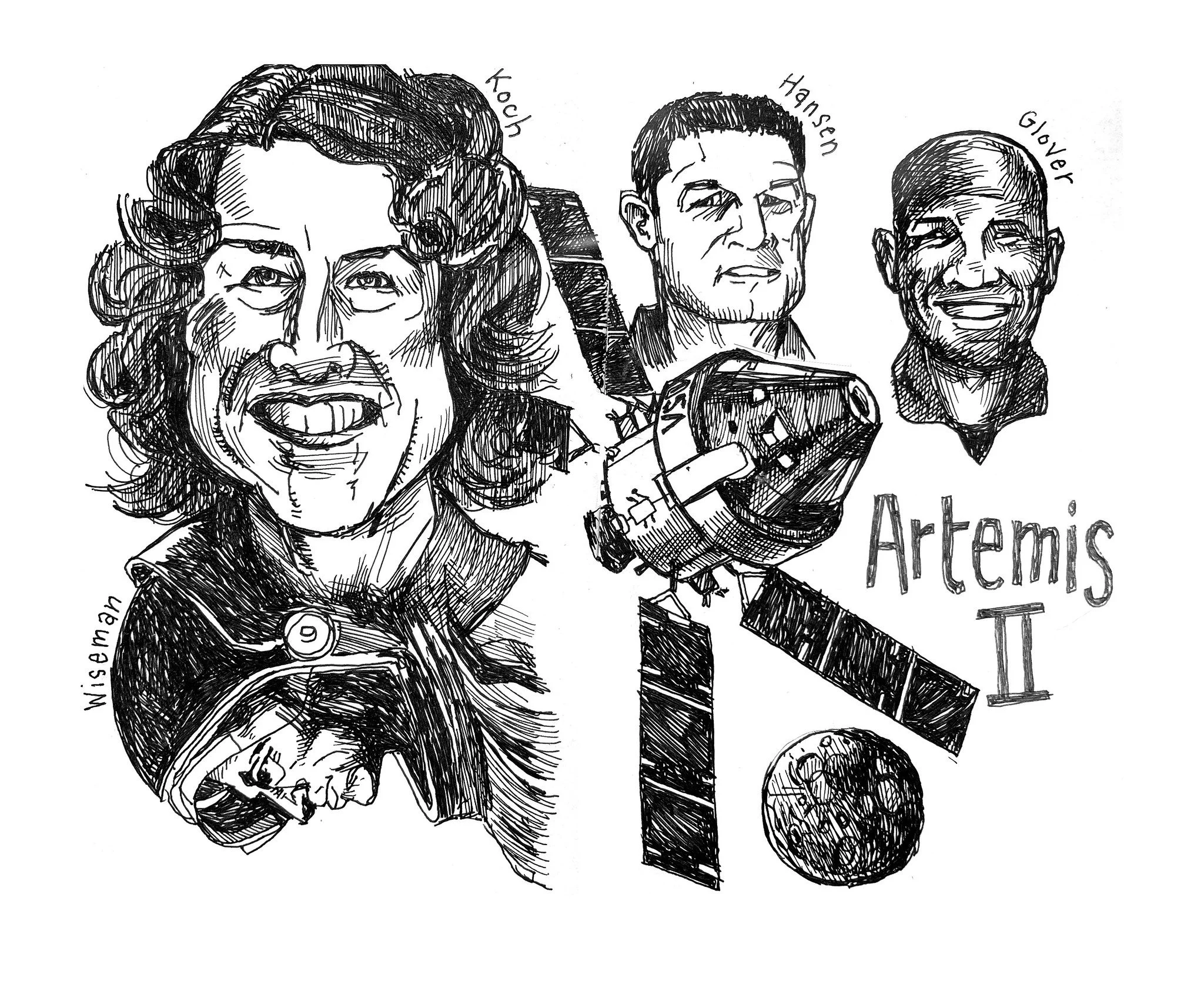
My own addition to all of the Artemis-inspired art made this week.
A Special Crew
Until now, no woman had ever flown to the moon. Until now, no black man had ever flown to the moon. Artemis II changed this. The crew, on constant display to anyone who wanted to watch the live stream, seemed not just like a team, but true comrades sharing a wonderous adventure together in their tiny machine hurtling through the void. The uplifting eloquence of Victor Glover and the ebullient, cheerful, and always smiling Christina Koch gave us a team that wasn’t afraid to show emotion—a dramatic departure from the Apollo crews of old. Koch in particular became a beloved hero to millions, showing everyone what we missed by excluding women from previous moon journeys.
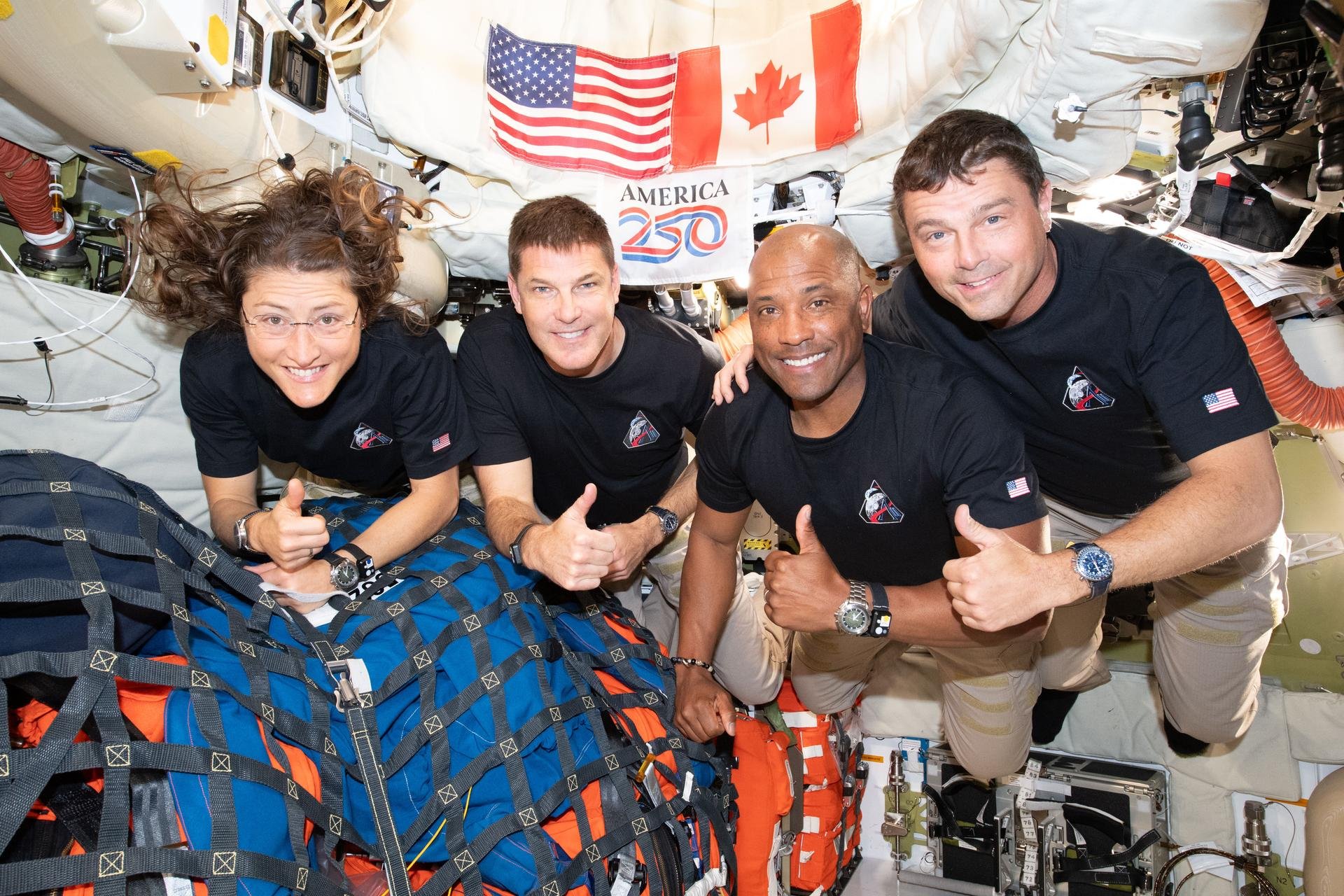
Christina Koch, Jeremy Hansen, Victor Glover, and Reid Wiseman.
Author Ray Bradbury repeatedly argued in essays and interviews that space programs should include poets, artists, and philosophers, not just engineers and pilots, to give space exploration cultural and imaginative depth. With Artemis II, Bradbury’s wish came closer to being granted to the rest of us.
Personal Reflections
A whole new generation that never experienced the thrill of a lunar mission finally got to feel it: my generation and the ones behind it.
I’ve been a dedicated Apollo history nerd ever since I accidentally learned in seventh grade that there had been more than one moon landing. Everyone always talks about THE moon landing, rarely the moon landings plural. I raced to the school library to learn more and became engrossed for the rest of my life, reading every book on the subject, many fresh off the presses as they were released in the 1990s and early 2000s. I grew up feeling cheated out of witnessing one of the most exciting adventures in human history—alive when it happened, but too young to be aware.
My generation got the Space Shuttle, a technological marvel...but subtly disappointing in that it didn’t “go” anywhere. Launches were exciting, and getting to low earth orbit was plenty dangerous, but as a destination, it simply wasn’t that interesting to me. We had been somewhere truly interesting, but we retreated to shores much closer to home because of a lack of national will, lack of a clear reason to continue lunar landings, and a congressional directive to make human space travel “cheap” by building a system based on reusable hardware. The Shuttle was always a grand experiment and in this case, the experiment proved that crewed spaceflight is never cheap. The Space Transportation System, as it was called, would prove to be extremely expensive.

George H. Bush promotes space exploration during a ceremony marking the 20th anniversary of Apollo 11 on July 20, 1989. Behind Bush, from left: Mike Collins, NASA Administrator Richard Truly, Neil Armstrong, Dan Quayle and Buzz Aldrin. Even as I watched this on live TV, I suspected little would come of it. It just felt like the president needed something to fill a 20th anniversary commemoration event.
America, often seeming to want to replay its greatest hits, would for decades look backward and promise to fly to the moon again. Presidents often embraced the idea during regular retrospective celebrations of the Apollo 11 mission. In 1989, I watched George H.W. Bush live on national television, in front of Neil Armstrong, Buzz Aldrin, and Mike Collins announce new plans to return to the moon and go to Mars. He probably meant it...to a small degree. There were so many false starts. George W Bush would make commitments similar to those of his father in 2004, announcing the Constellation program...which would later die, starved of necessary funding, though some hardware from that aborted effort would survive to become part of the Artemis program announced in 2019.
There had been so many announcements and so many vehicles canceled over the years that it seemed as if the U.S. government was committed to forever dangling the lunar carrot before the people without ever following through. After the success of SpaceX and their reusable rockets, I was skeptical that the giant SLS rocket, based on cobbled-together “legacy technology” (i.e., leftover parts from the Shuttle program), would ever fly. Even when it finally did in 2022, I never believed that it would carry a crewed ship to the moon. Color me pleasantly surprised.
After having consumed dozens of books on Apollo missions and watching all the video I could get my hands on, I finally had the chance to experience a mission to the moon unfolding in real time over the course of 10 days. It did not disappoint. At first, feeling that this was an elaborate PR “stunt” with little scientific value, I felt somewhat detached from the mission as launch day approached. This changed when the crew left the launch pad. I was completely swept up in it, sharing enthusiasm with friends and strangers from around the country via social media. It wasn’t the thrill of scientific discovery; it was the thrill of travelling to the only celestial neighbor close enough for puny, fragile humans to reach.
I was able to follow along anytime a computer was near. I could use the online visualizer tool provided by NASA to see how the Orion spacecraft was oriented in space and how sunlight was hitting it and visually how big the earth and the moon appeared to the crew. I could watch the crew go about their assigned tasks in the spacecraft (somewhat roomy compared to the much smaller Apollo spacecraft). I shared thoughts and images with friends via group chat throughout the week. We were all able to enthuse and marvel about it together, each of us enjoying this “science fiction come to life” adventure.
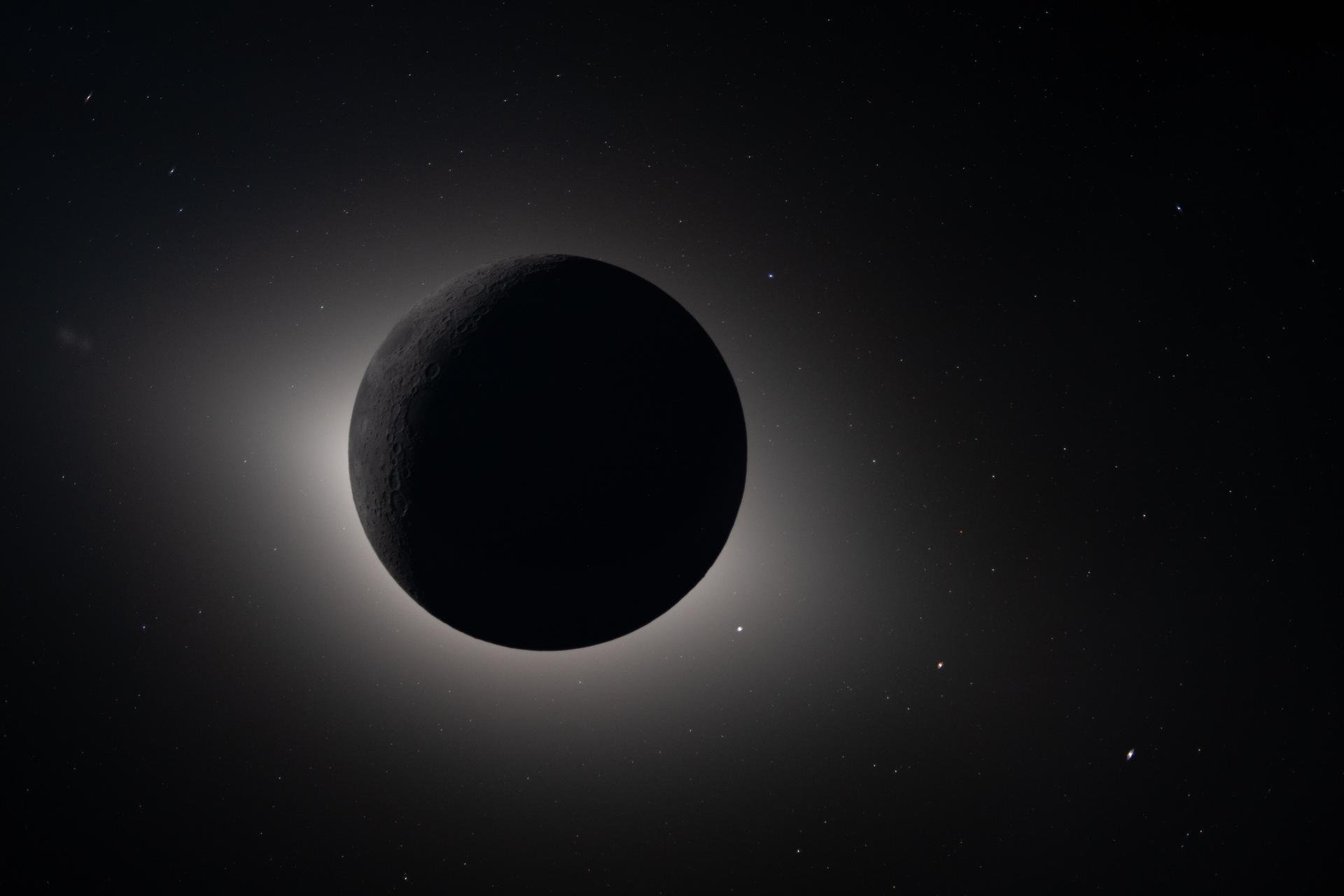
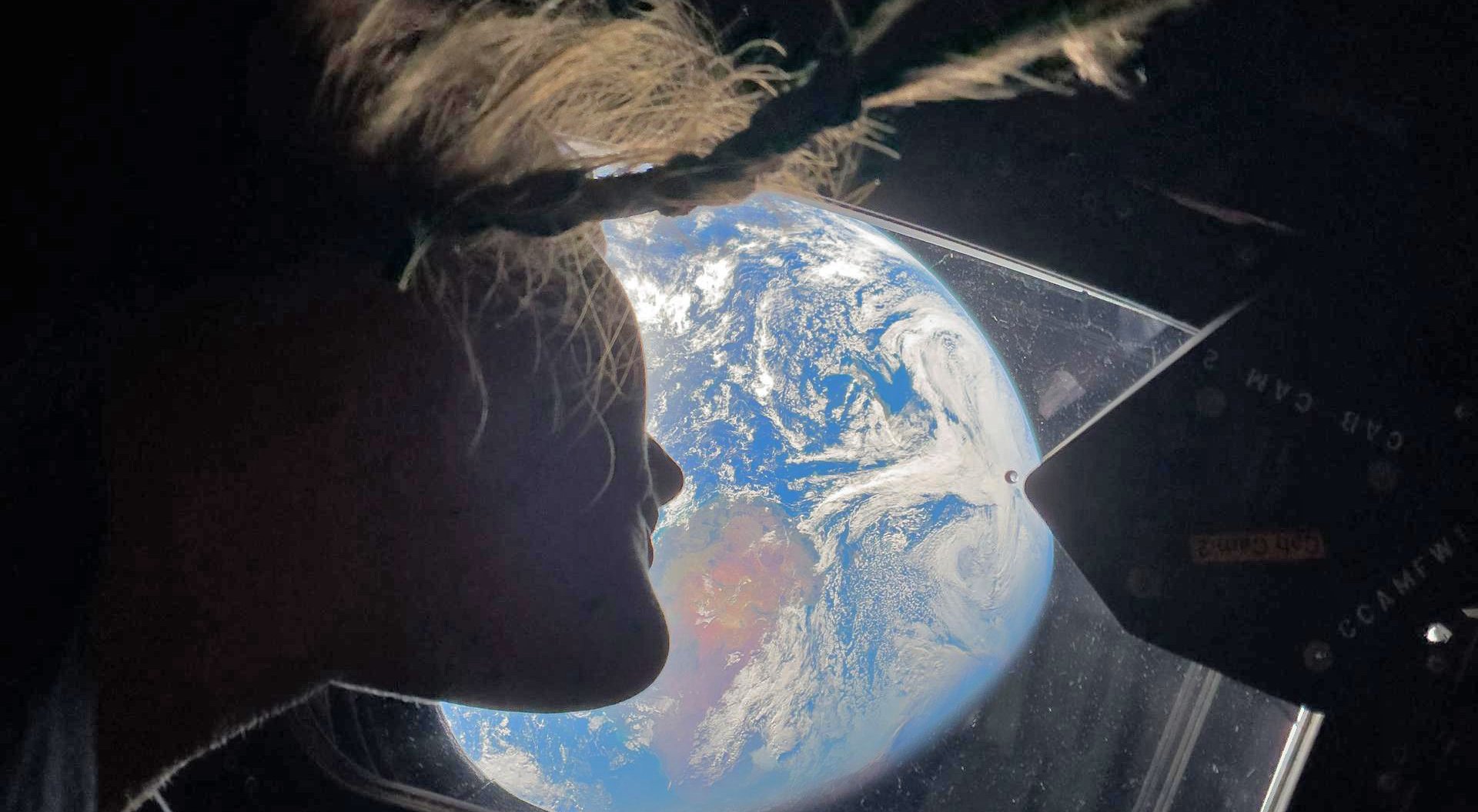
The mission delivered a true science fiction moment, photographing one of the most powerful images ever captured by humans in space.
On the Friday evening of splashdown, I happened to be out to dinner at a restaurant in Manhattan. Dining alone while my wife was out of town on travel, I was able to kibbitz with my buddies through a group chat, not only sharing where the spacecraft was in its journey home, but also what I was eating at each of the mission’s final stages. I marveled at a modern world in which I could follow the action on a ubiquitous pocket-sized computer and carry on a running conversation in real time with friends geographically spread out across the United States.
Throughout the mission, there was a lurking dread over the role of the capsule’s heat shield in protecting the crew. Though it survived reentry, the shield on the uncrewed Artemis I capsule showed unexpected damage. Engineers traced the cause to superheated gases within the shield material expanding and causing cracking that led to chunks blowing off. This was a concern because the material did not behave as predicted. Engineers don’t like that.
Though the shield for Artemis III would be redesigned, Artemis II had to carry the same design as its predecessor. NASA stated that the entry profile would be modified to reduce the heat load and that all would be well. But still, many worried…including me. Judging by social media posts, there was a universal public feeling that we needed this fairy tale to have a fitting triumphant end. And lately, world events had been repeatedly pulling the rug out from under our feet.
Happily, we needn’t have worried.
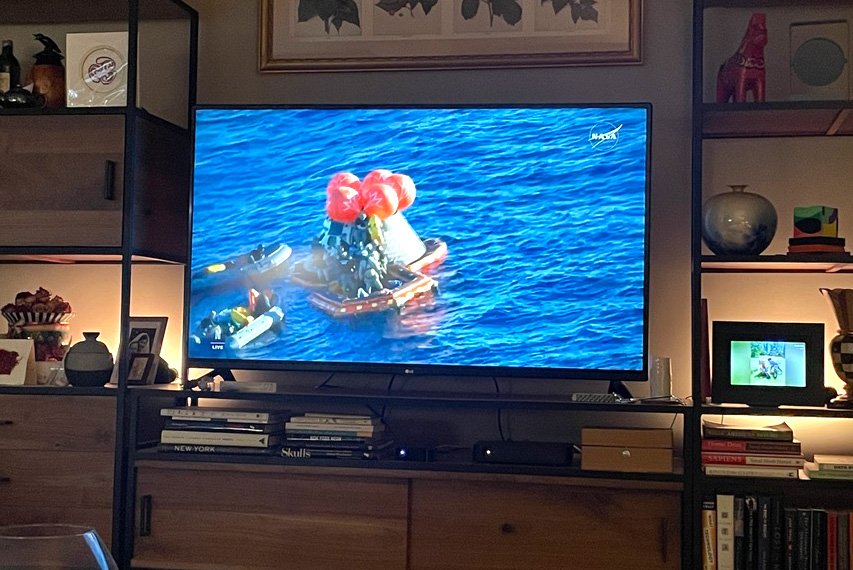
Watching the recovery with the rest of earth from the comfort of home.
It a cynical world, triumphs in space still have the power to inspire and unite. We’re not so jaded that we can’t experience awe at what humans can achieve. We can still gather together to rally for our cause as a species. Artemis II reminded America of what’s good about itself and threw its current low political and cultural moment into sharp relief. Though current events push anything more than 48 hours quickly into the rear view mirror, there will be a new generation of inspired people who will always remember how they felt this week.
As for me, I finally got to experience a crewed lunar flight to the moon, just as my parents did when Apollo 8 pioneered a similar mission in 1968. I always wondered how it must have felt to be there to see it unfold, watching humans make a journey straight out of the pages of science fiction. Now, I know. It was fantastic. And I look forward to what comes next.
Be sure and see the related article, “Art and Artemis II.”